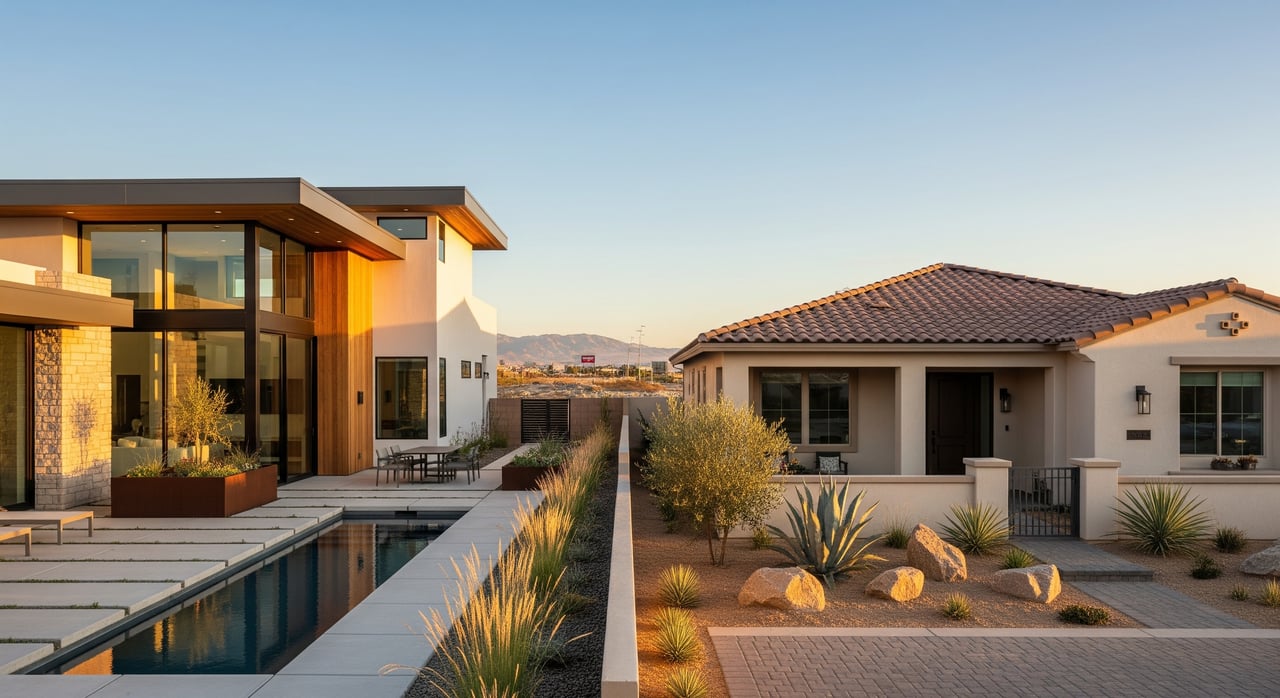
Trying to decide between a brand-new build and a move-in ready resale in North Las Vegas? You’re not alone. Each path has tradeoffs in price, timing, inspections, HOAs, warranties, and financing. This guide breaks down the real differences so you can focus on what fits your budget, timeline, and lifestyle. Let’s dive in.
New vs. resale: what really differs
New construction typically offers modern plans, energy-efficient systems, and the opportunity to personalize finishes. Resale homes offer established neighborhoods, mature landscaping, and faster closings. The best choice depends on how you value customization, move-in timing, negotiation flexibility, and ongoing costs.
Cost and incentives: what to expect
Base price vs. upgrades
- New construction often shows a lower base price that excludes many upgrades. Lot premiums and option selections can raise the final price.
- Resale pricing reflects condition and location. If a home needs work, the price per square foot can be lower, but you may plan for updates after closing.
Incentives and concessions
- Builders commonly offer incentives such as closing cost credits, temporary rate buydowns, or included upgrades, often tied to using the builder’s preferred lender or title company. Incentives can be time-limited and may not stack.
- In resale, seller concessions are negotiated based on market conditions. These can include closing cost credits, price reductions, or a home warranty at closing.
Ongoing ownership costs
- New homes can reduce near-term maintenance and may offer utility savings from modern HVAC and insulation. Newer communities can have higher initiation fees or early-stage assessments as amenities come online.
- Resale homes may need near-term repair or replacement of systems like HVAC or roof, which impacts your first-year budget.
For current pricing and trends, review market statistics from Las Vegas Realtors and confirm community-specific incentives with local builder sales offices.
Inspections and condition: what to look for
Resale inspections
- A standard buyer inspection typically covers structure, roof, plumbing, electrical, HVAC, and pests. Sewer or line scopes are common.
- Inspection findings often become negotiation points for repairs, credits, or price changes if your contingencies allow.
New construction inspections
- Builders conduct their own phase inspections and a final walkthrough with a punch list. Many buyers still hire independent inspectors for foundation, framing, and mechanicals. Some builders limit access to in-progress inspections, so confirm the rules upfront.
- Typical new-build issues include finish items, grading and drainage, irrigation or sod problems, and minor settlement cracks after move-in. Wood-destroying insect reports can still be relevant, depending on lender requirements.
Permits and occupancy in North Las Vegas
- The City of North Las Vegas Building and Fire Safety Department issues permits, conducts inspections, and provides certificates of occupancy. Before closing on a new home, verify permit records and that a certificate of occupancy has been issued. You can find department resources on the City of North Las Vegas website.
HOAs and community rules in Nevada
- Many North Las Vegas neighborhoods are in common-interest communities. In Nevada, these are governed by the Uniform Common-Interest Ownership Act under NRS Chapter 116.
- New communities may be controlled by the developer during early phases. Rules, assessments, and reserves can evolve as the community grows.
- Established HOAs often have detailed financials, reserve studies, meeting minutes, and a track record of rule enforcement.
- For resales, request and review the HOA resale package and budget. For new builds, review CC&Rs, budgets, and any developer transition plans.
Warranties and post-close protections
- Many builders use a common structure: roughly 1 year for workmanship and materials, 2 years for major systems, and up to 10 years for structural coverage. Specific terms vary by builder. For a general overview of industry practices, see the National Association of Home Builders.
- For resales, seller-paid home warranties are optional and typically cover certain systems and appliances for a defined period.
- In all cases, review what is covered, claim procedures, timelines, exclusions, and any arbitration or dispute processes.
Timeline and deposits
- Resale closings commonly run 30 to 45 days depending on financing, inspections, title, and HOA document timing.
- New construction timelines vary:
- Spec or inventory homes can often close in 30 to 90 days.
- Build-to-order homes may take 6 to 12 months or more, depending on permitting and construction pace.
- Builders often require staged deposits that can become non-refundable at certain milestones. Resale transactions typically involve earnest money held in escrow, refundable if contingencies are not met according to the contract.
Contracts and contingencies
Builder contracts
- Builder agreements are proprietary and may include deposit schedules, change-order rules, incentives tied to preferred lenders, arbitration clauses, and limited buyer remedies. Some include escalation clauses for materials or labor costs.
- Builders may restrict inspection or financing contingencies, particularly on spec homes, and can limit job-site access during construction.
Standard resale agreements in Nevada
- Resale deals typically use standard forms recognized in Nevada and offer more buyer-friendly contingency options for inspection, financing, title, and HOA review. For consumer guidance, explore resources from the Nevada Real Estate Division and Nevada REALTORS.
Appraisals and financing
Appraisals in new subdivisions
- Resale appraisals rely on closed comparable sales. If the appraisal comes in low, you may renegotiate, make up the difference, or cancel if your contingency allows.
- In new communities, appraisers may have fewer comparable sales. Appraisals can be more challenging and may not reflect certain upgrades or premiums in full.
FHA and VA for new builds
- Many new homes qualify for FHA or VA financing, but these programs can require additional inspections or specific conditions for new construction. Review program rules with your lender and consult guidance from HUD.
Incentives and lender choice
- Builders often offer incentives when you use their affiliated lender or closer. Compare the full loan package, not just the headline credit, and understand appraisal, rate, and fee implications. For general mortgage and appraisal guidance, see the Consumer Financial Protection Bureau.
How to decide: a simple checklist
Choose new construction if you want
- Personalization of finishes and layouts.
- Lower near-term maintenance and potential energy savings.
- A flexible move-in date aligned to build schedules.
- Builder incentives that offset closing costs or financing.
Choose resale if you want
- A faster, predictable closing timeline.
- Mature landscaping and established neighborhoods.
- Negotiation leverage on price or repairs.
- Clarity on HOA history, dues, and reserve funding.
Regardless of path, confirm
- Your total budget including upgrades or post-close improvements.
- Contingency timelines and deposit refund triggers.
- Inspection access and what happens if issues arise.
- HOA rules, assessments, and community plans.
- Appraisal scenarios and how you will handle a low value.
What to verify locally before you sign
- Permits and certificate of occupancy for new builds with the City of North Las Vegas.
- Parcel taxes, assessments, and recorded items with the Clark County Assessor and Recorder.
- Current market conditions through Las Vegas Realtors reports.
- HOA resale certificates, budgets, and meeting minutes under NRS Chapter 116.
Ready to compare homes side by side?
Whether you value customization or speed, the right choice comes down to your budget, risk tolerance, and timing. A trusted local advisor can help you weigh incentives against long-term costs, review HOA documents, and plan for inspections, appraisals, and financing.
If you are ready to tour both new builds and resales and see real numbers for North Las Vegas, reach out to Robert Plummer. Make it happen. Contact Robert today.
FAQs
What are the biggest cost differences between new construction and resale in North Las Vegas?
- New builds often carry upgrade and lot premiums, while resales may cost less per square foot but can require near-term repairs or updates.
How do HOAs differ between new and established communities in Nevada?
- New HOAs may be developer-controlled and evolving, while established HOAs usually have mature budgets, reserve studies, and documented enforcement under NRS Chapter 116.
Do I still need an inspection on a brand-new home?
- Yes. Independent inspections can catch punch-list items, grading or irrigation issues, and other defects that are best addressed before closing.
What kind of warranty comes with a new build?
- Many builders follow a 1-2-10 style structure for workmanship, systems, and structural coverage, but details vary. Review the warranty and claim process, and see the NAHB overview for general context.
How long does it take to close on new construction vs. resale?
- Resales often close in 30 to 45 days. Spec new homes can close in 30 to 90 days, while build-to-order can take 6 to 12 months or more depending on permitting and construction.
What if the appraisal comes in low on a new home?
- In new subdivisions, comps can be limited. Plan for appraisal gap strategies or discuss renegotiation options if your contract and contingencies allow.
Where can I check permits or property taxes for a North Las Vegas home?
- Use the City of North Las Vegas for permit and occupancy information and the Clark County Assessor for parcel taxes and assessments.
