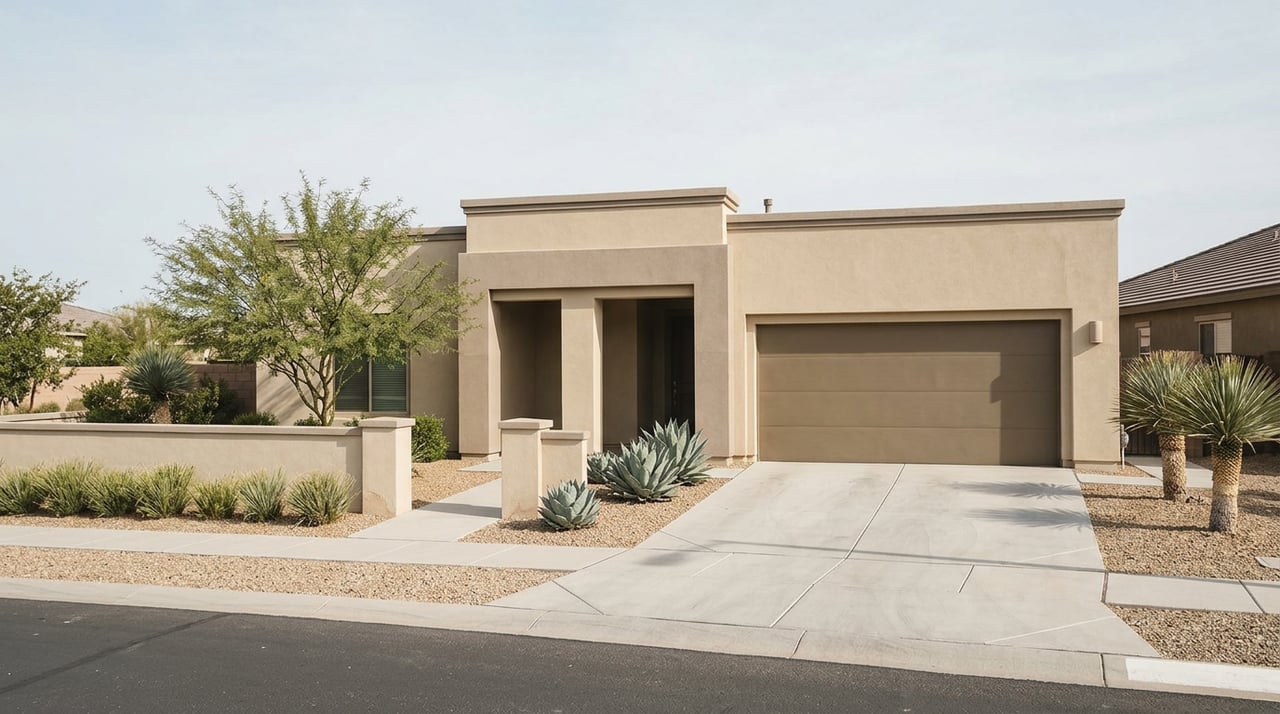
Picture two three-bedroom homes in North Las Vegas, listed the same week, four miles apart, within a few thousand dollars of each other on price. One sits in the established grid south of Craig Road. The other sits in one of the newer master-planned pockets pushing toward the Sheep Mountains. Same bedroom count, same rough square footage, same city. What the listing sheet does not show is that one of these homes carries an extra $800 to $2,500 a year that the other one does not, and that difference never shows up in a median-price comparison, a search filter, or a mortgage pre-approval letter.
That gap has a name: the SID or LID assessment. It is one of the few line items in North Las Vegas real estate that genuinely changes the math between two homes that otherwise look identical on paper, and it is exactly the kind of detail that surfaces late in a transaction if nobody asks about it early.
The Charge That Shows Up After You've Already Fallen For The House
A Special Improvement District or Local Improvement District is a bond-financed way for a city to pay for the streets, sewers, drainage, and lighting that a brand-new master plan needs before the first house closes. Instead of the whole city absorbing that cost through general taxes, the parcels inside the new development get assessed directly, and the assessment follows its own repayment schedule. Clark County's Treasurer describes it plainly: a special assessment is a lien on the property, separate from your regular property tax, that stays in place until it is paid off, and it can only be levied against parcels that received a direct benefit from the public project the bond financed.
That last part matters. It means the assessment is not evenly distributed across North Las Vegas. It shows up in the newer northwest corridor, where the infrastructure was built recently and financed this way. It largely does not show up in the older grid, where the infrastructure was already in the ground decades ago and paid for through a different era's financing.
It also matters that this charge is not covered by Nevada's 3 percent tax cap. The cap under NRS 361.4723 limits how fast your primary residence property tax bill can grow year over year, but a SID or LID assessment is billed separately from the ad valorem tax roll. It follows its own repayment schedule.
Same City, Two Very Different Cost Structures
The clearest way to see this is to look at North Las Vegas by corridor rather than by city median.
| Corridor | Typical ZIPs | Median price (mid-2026) | HOA dues | SID/LID assessment | What you're actually financing |
|---|---|---|---|---|---|
| Entry grid, south of Craig Road | 89030, 89031, 89032 | Around $295,000 in 89030 | Often none | Rare | Older infrastructure already paid off decades ago |
| Established master plans | Aliante, Eldorado (older sections) | Mid-range for the city | Roughly $50 to $150 a month | Sometimes present, often smaller balances | Golf, parks, and rec amenities built in the 2000s |
| Newest northwest corridor | 89084, 89085 (Valley Vista, Villages at Tule Springs) | $480,000 to $505,000 | Roughly $80 to $200 a month | $800 to $2,500 a year | Brand-new streets, sewer, and drainage still being paid down |
That entry corridor, especially 89030, is also where a large share of streets carry no HOA at all, which is unusual for the Las Vegas Valley and part of why the ZIP draws steady investor and first-time-buyer interest. The tradeoff is that older stock demands more inspection diligence: roofs, HVAC systems, and plumbing that have already had two or three decades of desert sun on them.
The Premium In The Northwest Corridor Isn't Only About Finishes
It is tempting to look at the $200,000 gap between the entry grid and Valley Vista and assume it is entirely about square footage and granite countertops. Some of it is. But part of that premium is tied to the bond-financed roads and sewer lines under the lot. A buyer comparing price per square foot across the two corridors without pulling the parcel's assessment history is comparing two different financial products, not just two different houses.
Aliante, the city's flagship master plan with its golf course and Nature Discovery Park, and the neighborhoods around the 170-acre Craig Ranch Regional Park sit in between. Their infrastructure was financed a generation ago, so many of those original bonds are further along or fully retired, which is part of why they read as established value rather than premium new construction on a price sheet.
The Old Grid Is Getting Its Own Investment, Just Paid A Different Way
The older section of North Las Vegas is not being left behind while the northwest corridor pays for its own upgrades. It is getting investment through a different mechanism entirely. In April 2026, the city's Redevelopment Agency opened three grant programs aimed at neighborhoods near City Hall, including a Residential Curb Appeal Program that reimburses homeowners up to $25,000 for street-facing improvements like roof repairs, siding, fencing, and paint, according to a Fox5 Las Vegas report. A companion commercial facade program offers businesses up to $75,000 for similar exterior work.
The report also quoted Councilwoman Ruth Garcia-Anderson, who chairs the Redevelopment Agency board: "a program like this will not only enhance the communities, but it will also help homeowners increase their property values." The grants only apply to properties inside specific tax districts, numbered 253, 255, and 256, which cover the areas near City Hall that the city has designated for redevelopment. Homeowners and buyers can check whether a specific address falls inside those districts through the city's Redevelopment Agency page before assuming it does or doesn't qualify.
That is the real symmetry in this story. The newer corridor pays down its own infrastructure bond over decades. The older corridor is now receiving city-funded grants to upgrade its curb appeal without a bond at all. Neither path is free. They just bill the homeowner in completely different ways.
What To Check Before You Write An Offer
A few minutes of due diligence before you get emotionally attached to a listing will save you a surprise at the closing table:
- Ask your agent or the title company to pull the parcel's assessment history and confirm whether a SID or LID balance exists, the annual amount, and the years remaining.
- If you're buying in the older grid, check the parcel's tax district number against 253, 255, or 256 to see if it sits inside a Redevelopment Agency boundary, especially if you plan to update the exterior after closing.
- Don't assume a neighbor's paid-off assessment means yours is paid off too. Districts inside the same master plan can have different remaining balances depending on when a phase was built and bonded.
- Factor the SID/LID annual amount into your monthly budget the same way you would an HOA due, since lenders and your own affordability math should treat it as a real recurring cost, not a footnote.
Why This Matters More Now Than It Did Five Years Ago
North Las Vegas has grown from roughly 216,961 residents in 2010 to somewhere near 291,143 as of mid-2026, and city projections put it closer to 330,000 by 2030 as the Apex Industrial corridor and the Tule Springs area continue to build out. Apex alone is a multi-thousand-acre logistics and manufacturing zone bringing steady payroll growth to the city's northeast, and that growth is exactly what's pulling more buyers into a direct comparison between the established grid and the newer master plans. As more people weigh a lower entry price against a newer build with a recurring assessment, understanding what that assessment actually pays for, and how long it lasts, becomes a real part of the decision instead of a line item to skim past in escrow.
A Few Questions Worth Asking Before You Close
Is a SID or LID covered under Nevada's 3 percent tax cap? No. The cap under NRS 361.4723 applies to your ad valorem property tax bill. A SID or LID is a separate assessment.
How do I find out if a specific North Las Vegas home carries an assessment or sits in a redevelopment district? The Clark County Treasurer's office can confirm SID and LID balances tied to a parcel, and the city's Redevelopment Agency page can confirm whether an address falls inside tax district 253, 255, or 256. Your agent should be pulling both before you write an offer, not after.
Comparing North Las Vegas by median price alone flattens two very different cost structures into one number. If you're weighing the entry corridor against the newer northwest master plans, or you're trying to figure out what a specific parcel actually costs to own once the assessment is factored in, that's exactly the kind of groundwork Robert Plummer walks clients through before an offer goes in, not after. Make It Happen. Contact Robert today.
This article is general information, not legal, tax or financial advice. Consult a qualified professional about your situation.
